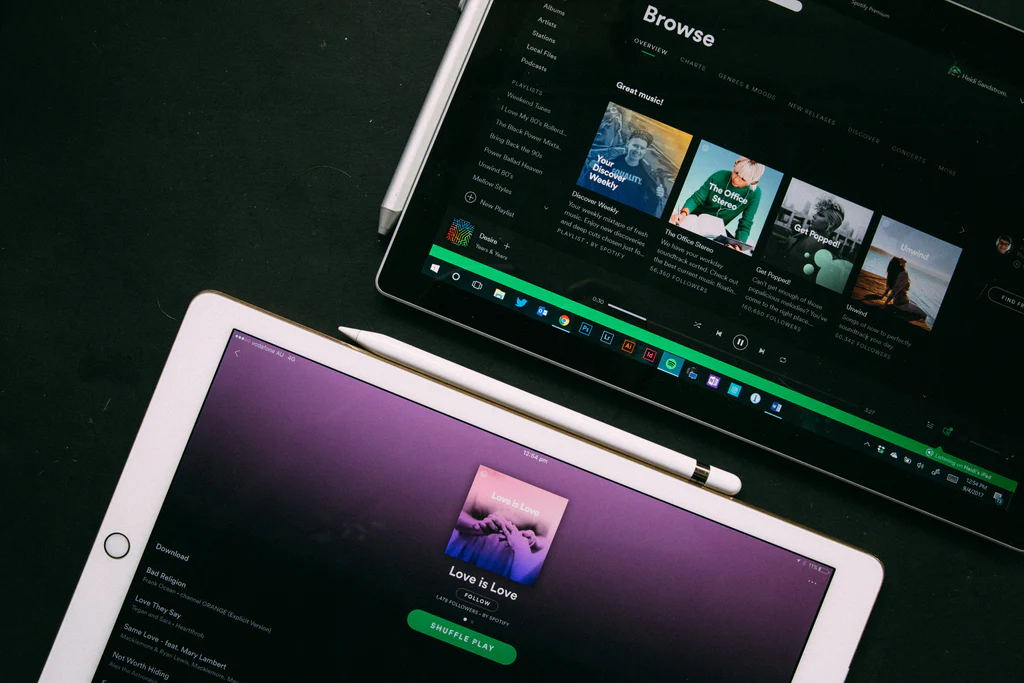
Spotify playlists drive more than 30% of discovery streams for independent artists. For many releases, playlists—not followers—are the main entry point for new listeners. But landing on playlists isn’t about luck or paying for bots. It’s about understanding how Spotify’s ecosystem works and targeting the right playlist types with the right strategy.
Spotify playlists fall into three categories—editorial, algorithmic, and independent—and real growth comes from working all three together.
Why Playlists Matter More Than Ever
Spotify’s recommendation system prioritizes listener behavior, not hype. Songs that generate saves, playlist adds, and full listens signal quality to the algorithm. That data feeds directly into algorithmic playlists and increases the chance of editorial placement.
In short:
- Engagement fuels algorithms
- Algorithms drive discovery
- Discovery attracts editors
The Three Types of Spotify Playlists (and How to Target Them)
1. Editorial Playlists (Spotify-Curated)
Editorial playlists are curated in-house by Spotify’s music editors and offer massive exposure. While they’re competitive, they’re still accessible—if you pitch correctly.
How to get in:
- Claim your profile on Spotify for Artists
- Pitch one unreleased track per release
- Submit 7–28 days before release
Editorial editors look for:
- Clear genre and mood
- Cultural or artistic context
- Momentum (early fan interest helps)
2. Algorithmic Playlists
Algorithmic playlists are driven entirely by listener data. They include personalized feeds like Release Radar and Discover Weekly.
How to trigger them:
- Strong Day 1 engagement
- High save-to-stream ratio
- Low skip rate
- Playlist adds from real users
Spotify’s algorithm watches what happens in the first 24–72 hours after release. Artificial streams or bots will hurt your chances long-term.
3. Independent (Third-Party) Playlists
Independent playlists are curated by bloggers, tastemakers, and niche music brands. They vary in size but are often easier to access and highly influential within specific scenes.
Examples include:
- Genre-specific playlists
- Mood or activity playlists
- Local or regional curator lists
These playlists often act as the bridge between early traction and algorithmic growth.
Step-by-Step: How to Pitch Your Music to Spotify Playlists
Step 1: Prepare 3–4 Weeks Before Release
Before pitching anything, make sure your foundation is solid.
Checklist:
- Claim and verify your Spotify for Artists profile
- Complete bio, photos, and links
- Upload via your distributor (e.g., TuneCore or DistroKid)
- Set up a pre-save campaign
- Ensure metadata (genre, mood, language) is accurate
Spotify uses metadata and what’s often called “Song DNA” to match tracks with playlists—this directly affects AI-driven recommendations.
Step 2: Pitch to Spotify Editorial Playlists
Inside Spotify for Artists:
- Go to Music → Upcoming
- Select your unreleased track
- Click Pitch a Song
- Fill out the pitch form carefully
Key rules:
- Pitch only one track per release
- You have 500 characters to tell your story
- Do not include marketing language (“out now,” “playlist-ready”)
What to include instead:
- Vibe and mood
- Sonic references
- Inspiration or context
- Where the song fits emotionally or culturally
Example pitch:
“Upbeat indie pop with nostalgic synths and warm vocals—think Tame Impala meets Clairo. Written for late-night drives and reflective moments, blending analog textures with modern pop structure.”
Step 3: Activate Independent Playlist Curators
While waiting for editorial decisions, start outreach to independent curators.
How to find them:
- Scroll to “Discovered On” section of similar artists
- Search genre/mood playlists manually
- Use platforms like Groover, Boost Collective, Playlist Push, or SubmitHub
Best practice:
- Contact 40–50 curators per release
- Personalize every message
- Reference their playlist by name
- Explain why your song fits their audience
Outreach example:
“Your playlist focuses on mellow indie pop, and my new track fits perfectly alongside artists like [X]. I think it would resonate with your listeners.”
Expect a 1–5% placement rate—this is normal.
Step 4: Boost Algorithmic Signals on Release Day
Once the song is live, your job is to create real engagement fast.
Focus on:
- Driving streams from existing fans
- Encouraging saves and playlist adds
- Avoiding skips (don’t push to the wrong audience)
Effective tactics:
- Email your list
- Share pre-save follow-ups
- Post short-form content linking directly to Spotify
- Pin the Spotify link on social profiles
Even a few hundred high-quality interactions can unlock algorithmic playlists.
Tracking Playlist Performance
Inside Spotify for Artists, check:
- Music → Playlists
- Which playlists added your track
- Listener growth by source
- Save and skip rates
Use this data to refine future pitches and identify which curators or strategies work best.
What Changed in 2026?
Spotify has made several important updates:
- Mood and activity playlists (e.g., study, focus, chill) now outperform genre-only lists
- Fake or botted playlists are aggressively penalized
- Metadata accuracy matters more than follower count
- Authentic engagement is rewarded faster
Pay-for-stream schemes and artificial boosts are more likely to suppress your reach than help it.
Leveraging Your Distributor for Playlist Growth
Modern distributors offer tools that amplify playlist strategies:
- Canvas loops for higher engagement
- Pre-save smart links
- Metadata optimization
- Release timing controls
Using these features strategically can increase saves and repeat listens—key signals for Spotify’s algorithm.
Final Thoughts
Getting on Spotify playlists in 2026 is not about shortcuts—it’s about systems.
Independent artists who succeed:
- Pitch early and correctly
- Combine editorial, algorithmic, and indie playlists
- Focus on real listener engagement
- Avoid bots and fake promotion
- Repeat the process consistently
Playlists don’t just boost streams—they build momentum. And momentum is what turns a release into a career.
If you treat playlist pitching as a repeatable workflow, not a one-off gamble, Spotify becomes a growth engine—not a black box.