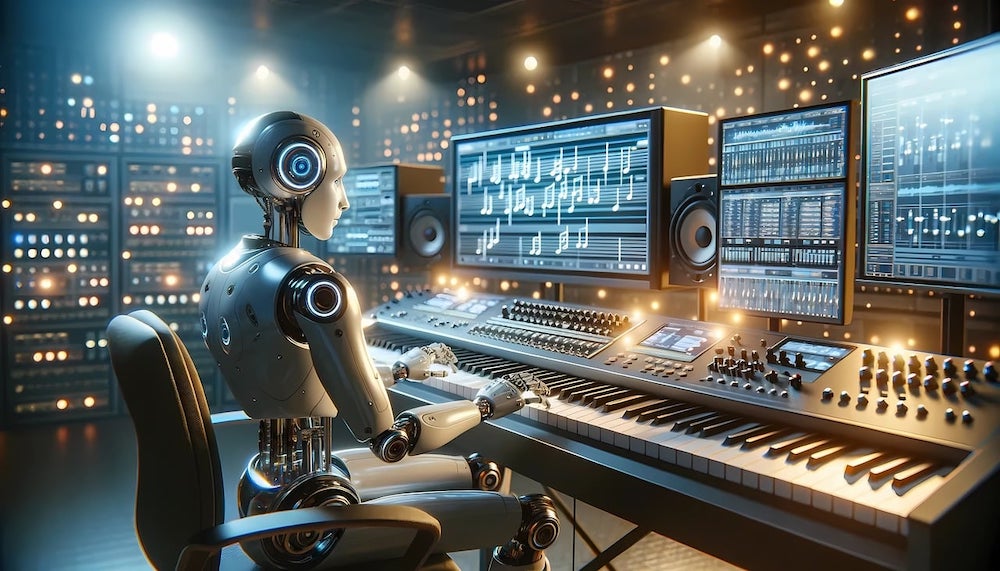
Artificial intelligence has become a core productivity layer in modern music production. Rather than replacing creativity, today’s AI tools help artists move faster—automating ideation, composition, mixing, and mastering while leaving artistic decisions firmly in human hands.
For independent artists and producers—especially those already exploring streaming economics, publishing, and distribution—AI tools offer a competitive edge. When integrated properly into digital audio workstations (DAWs) like Ableton Live or Logic Pro, AI dramatically shortens production cycles from idea to release.
This guide breaks down the best AI music tools in 2026, how professionals actually use them, and how to combine them into a workflow that supports—not replaces—artistry.
Why AI Matters in Music Production Now
The biggest shift in 2026 isn’t that AI can make music—it’s that AI accelerates decision-making. Instead of spending hours:
- Starting from a blank session
- Cleaning stems manually
- Guessing EQ curves
- Re-mastering tracks endlessly
Producers now use AI as a first pass or creative collaborator.
The result:
- Faster demos
- More finished songs
- Higher-quality mixes
- Shorter release cycles (crucial for algorithms)
Top AI Music Tools by Category (2026)
These tools are widely adopted by independent artists and producers, with free tiers available for testing.
🎼 Full Track Generation: Suno
Best for: Rapid ideation, demos, genre exploration
Suno leads the AI text-to-song category in 2026. Artists can generate full tracks with vocals, lyrics, and arrangements using simple prompts.
Key features:
- 50+ genres and styles
- Full song structure (verse, chorus, bridge)
- Stem export (vocals, drums, instruments)
- Fast iteration for songwriting ideas
Price: Free tier / $10–$30 per month
How pros use it:
Producers rarely release Suno tracks “as is.” Instead, they export stems and rebuild the song inside a DAW, replacing or enhancing parts with real instruments or plugins.
🎹 Composition Assistance: AIVA
Best for: Cinematic, orchestral, and harmonic composition
AIVA excels at generating musical ideas in MIDI format, making it ideal for composers, film scorers, and electronic producers who want structural inspiration.
Key features:
- Style-based composition (cinematic, classical, ambient)
- MIDI export for full DAW control
- Chord progressions and motifs
Price: Free / $15–$49 per month
How pros use it:
AIVA is often used to generate harmonic foundations, which producers then rescore, rearrange, or hybridize with synths and samples.
🎛️ Stem Separation: LALAL.AI and Soundverse
Best for: Remixing, sampling, editing AI-generated or legacy audio
Stem separation tools are essential when working with AI-generated audio or older tracks without multitracks.
Key features:
- Isolate vocals, drums, bass, instruments
- Clean separation with minimal artifacts
- Useful for remixes and Shorts-ready content
Price: Free / $15+ per month
How pros use it:
Producers often run Suno or demo tracks through stem separators, discard weak elements, and rebuild the track around the strongest parts.
🎚️ Mixing: iZotope Neutron 5
Best for: Fast, professional-quality mixes
Neutron 5 remains one of the most respected AI-powered mixing tools. Its Mix Assistant analyzes your session and proposes EQ, compression, and balance moves.
Key features:
- AI Mix Assistant
- Track-to-track masking detection
- Visual mixing feedback
- Fully manual override
Price: ~$199 one-time
How pros use it:
Neutron is used as a starting point, not a final authority. Engineers let the AI suggest a balance, then fine-tune creatively.
🔊 Mastering: LANDR (Plugin)
Best for: Fast, release-ready masters inside a DAW
LANDR’s plugin allows AI mastering without leaving your session, adapting dynamically to the mix.
Key features:
- Genre-aware mastering chains
- Loudness targeting for streaming
- DAW integration
- Revision-friendly workflow
Price: ~$10 per month
How pros use it:
LANDR is ideal for singles, YouTube releases, and rapid drops. Final label releases may still get human mastering, but LANDR handles 80% of needs.
🎤 Vocals & Sound Design: ACE Studio and Synplant 2
Best for: Vocal experimentation and original sound creation
These tools focus on expressive control rather than automation.
- ACE Studio enables AI-driven vocal performances
- Synplant 2 generates synth sounds via AI-based seed generation
Price: $20–$100 (varies)
A Real-World AI Music Workflow (2026)
Here’s how independent producers actually combine these tools:
1. Ideation
Prompt Suno or AIVA for demo ideas
Export stems or MIDI into Ableton or Logic
2. Editing & Remixing
Use LALAL.AI or Soundverse to isolate elements
Discard weak parts, rebuild structure
3. Production & Mixing
Replace AI instruments with plugins or hardware
Run iZotope Neutron for mix suggestions
4. Mastering
Finalize with LANDR inside the DAW
Adjust loudness for Spotify and YouTube
5. Release & Monetization
Export and distribute via TuneCore
Enable YouTube Content ID and streaming monetization
Pro Tip: Conversational AI Chains
Soundverse’s AI Agent allows multi-step prompts, such as:
“Generate a pop track, remove drums, isolate vocals, export stems.”
This kind of conversational workflow points to where AI music tools are heading—fewer clicks, faster decisions.
AI Does Not Replace Artists—It Replaces Friction
The most successful producers in 2026 don’t let AI finish songs for them. They use it to:
- Escape creative blocks
- Speed up technical tasks
- Test more ideas
- Release more consistently
Human taste, emotion, and storytelling still determine what connects with listeners.
Final Thoughts
AI music tools in 2026 are best understood as creative accelerators, not shortcuts to success. When paired with strong songwriting, smart distribution, and monetization strategies, they allow independent artists to operate at a professional level with fewer resources.
For artists already focused on streaming, YouTube monetization, and publishing, AI completes the loop—helping you create faster, release smarter, and stay competitive.
The future of music production isn’t human or AI.
It’s human with AI.